
Is a mud house practical in a city? An honest guide to modern earth building
By Red Brick Studio · · 2 min read
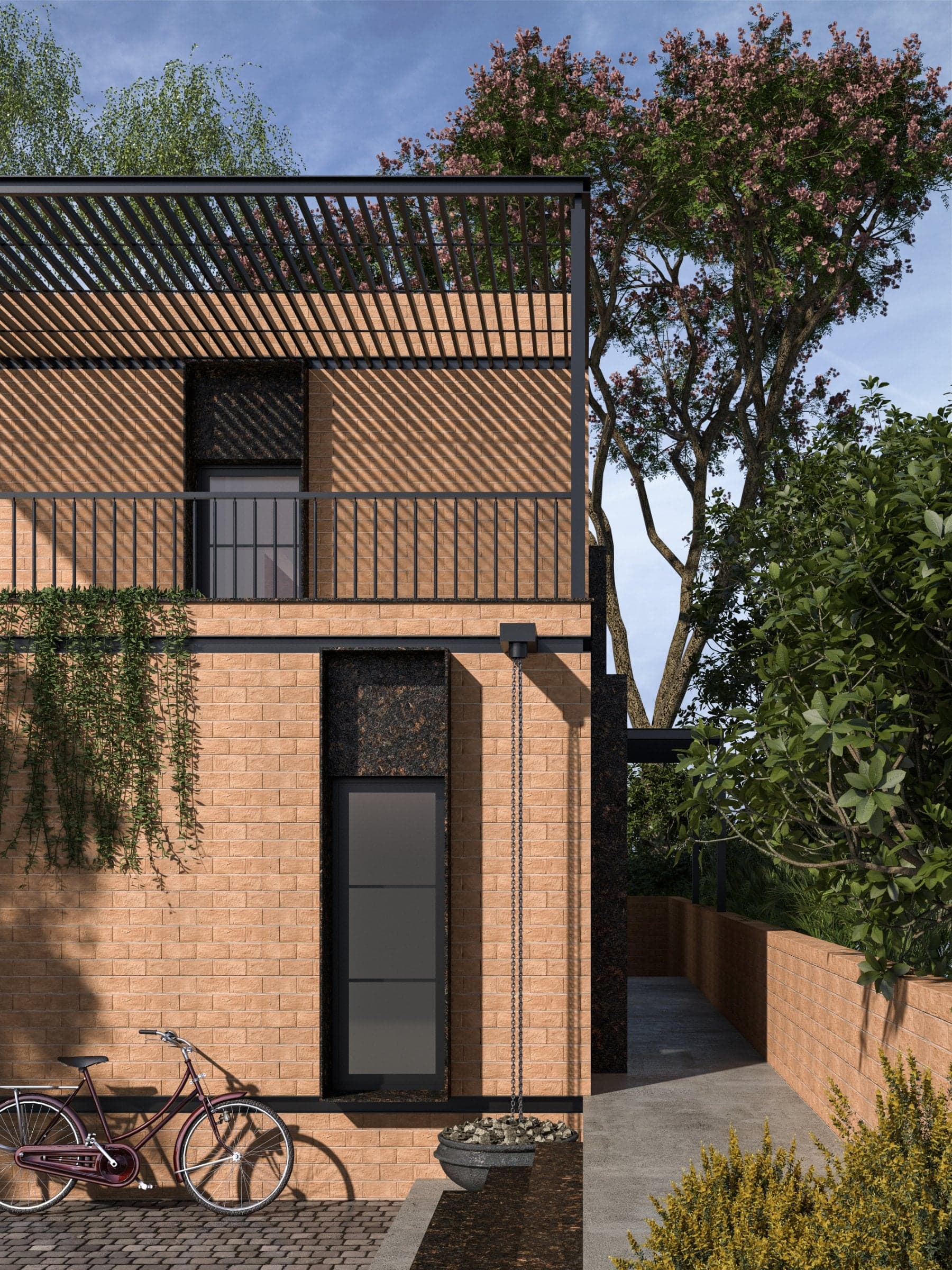
Yes, in the right form. Modern earth building uses stabilised earth and good detailing, not unprotected mud, and it can suit a city plot. It works best with a design that keeps water off the walls and a team used to the craft. It also has real limits, covered below.
What 'mud house' means today
Traditional, unstabilised mud houses are vulnerable to rain, and every monsoon some of them need repair. Modern earth building is different. In most contemporary Indian work the earth is stabilised, commonly with a small share of lime or cement, which adds strength and water resistance. The result can look like traditional earthen walls but is far more durable.
What the Urban Mud House tried to show
Urban Mud House, a private residence in Hyderabad completed in 2019, was designed as an example of a house that answers the pressures of a growing city, with limited time, money and space, without giving up environmental, economic and social sensitivity.
One example of the approach: the typical reinforced concrete slab was replaced by a jack arch slab built in brick. Brick is a low-energy material, and the method uses more labour and less material, which engages more local labour.
We do not claim that this is the right method for every house. It is a deliberate trade-off, and it works best when the client, the architect and the builders all want it.
The honest limits
- Labour and skill: the craft depends on trained hands, and good teams are not available everywhere.
- Wall thickness: earth walls are thicker than conventional ones, which uses plot area.
- Formwork and time: some methods need careful formwork and can be slower.
- Erosion and rain: walls need good protection, such as roof overhangs and a raised base, and heavy-rain regions need extra attention.
- Long-term data: there is limited published long-term performance data for luxury earth homes in Indian monsoon conditions, so a good architect should be honest about what is proven and what is not.
Where it makes sense
Earth building suits clients who value natural materials, thermal comfort and a lighter environmental footprint, and who are willing to work with a team that knows the craft. It is a particularly good fit for weekend and holiday homes, where the setting invites natural materials. If you are weighing it for a plot, talk to us about the site first. The soil, the rainfall and the access decide more than the style.
Common questions
- Are mud houses safe in the monsoon?
- Unprotected mud is not. Stabilised earth with good detailing, such as generous roof overhangs and a raised base, is designed to handle rain. Details matter more than the material alone.
- Is an earth home cheaper than a conventional house?
- Not necessarily. It tends to shift cost from materials to skilled labour. We cannot give a number without a specific site and design.
- Does a mud house stay cooler?
- Thick earth walls are known to moderate indoor temperature across seasons. How much depends on the design, orientation and climate.
- Can a mud house look modern?
- Yes. Contemporary earth houses in India range from rough and rustic to refined and minimal. The finish is a design choice.
Projects mentioned
Sources for general guidance
Planning a project?
Red Brick Studio is an architecture, interior and landscape studio in Pune. Tell us about your site and what you have in mind.
Start a conversation