
Turnkey, design-build or architect plus contractor: which should you choose in India?
By Red Brick Studio · · 4 min read
Turnkey or design-build gives you one firm and one contract, which is simpler. Hiring an architect and a contractor separately gives you independent design and inspection, but more coordination. Choose by how much you want to manage yourself, and always ask who checks the quality of the work on site.
A note before we start
Red Brick Studio is an architecture, interior and landscape studio, so the architect-led route is the one we know best. We have tried to describe all three routes fairly, but weigh our view with that in mind.
The three routes
- Architect and contractor hired separately: you sign one contract with the architect for design and another with the contractor for building. Each has its own accountability.
- Turnkey or design-build: one firm designs and builds under a single contract, and hands over a finished house.
- Architect-led, with independent oversight: the architect designs and detailed drawings are priced by builders, with the architect or a project management consultant (PMC) checking the work on site.
What turnkey does well
- One point of contact and less coordination for you.
- A single price and timeline from the start, which many families value.
- One firm responsible for both design and execution.
Builders who offer turnkey often point out that separate teams can lead to multiple negotiations, split accountability and delays. That can be true when the roles are not clearly defined.
What to watch with turnkey
- Conflict of interest: the firm designing your house also profits from building it, so design can lean towards what is easy to build. One Indian guide says this is structural, not a matter of bad people, and that inspection rights matter more than buyers expect.
- Less competitive pricing: you work with one firm from the start, so you cannot easily take the same plans to several builders for comparison.
- Handing over control: day-to-day decisions sit with the builder's team, so ask how you will see and approve what is built.
- Scope gaps: a lower turnkey price may leave items out, so compare full scopes, not just base rates.
What an independent architect adds
When the architect is not also the builder, the drawings become the contract between you and the builder. Detailed drawings let several builders price the same house, and the architect's site visits check that what is built matches what was drawn. The trade-off is that you manage two relationships and need a clear process for who decides what.
Our own process leans on documentation. Anil Poduval, one of our principals, believes that a well-kept record and a clear process carry an idea faithfully from the first sketch to the finished building. We also test ideas early, with sketches, models and mock-ups, because a problem found on paper costs far less than one found on site.
Whichever route you pick, ask these questions
- Who is accountable if something is built differently from the drawing?
- Who inspects the work, and how often? Is that person independent of the builder?
- What exactly does the price include and exclude?
- How are payments tied to completed work? Can you hold back payment for defects?
- Is the person calling themselves an architect registered with the Council of Architecture? Under the Architects Act, 1972, only registered architects may use the title in India.
- What happens if the design changes after construction starts?
When each route fits
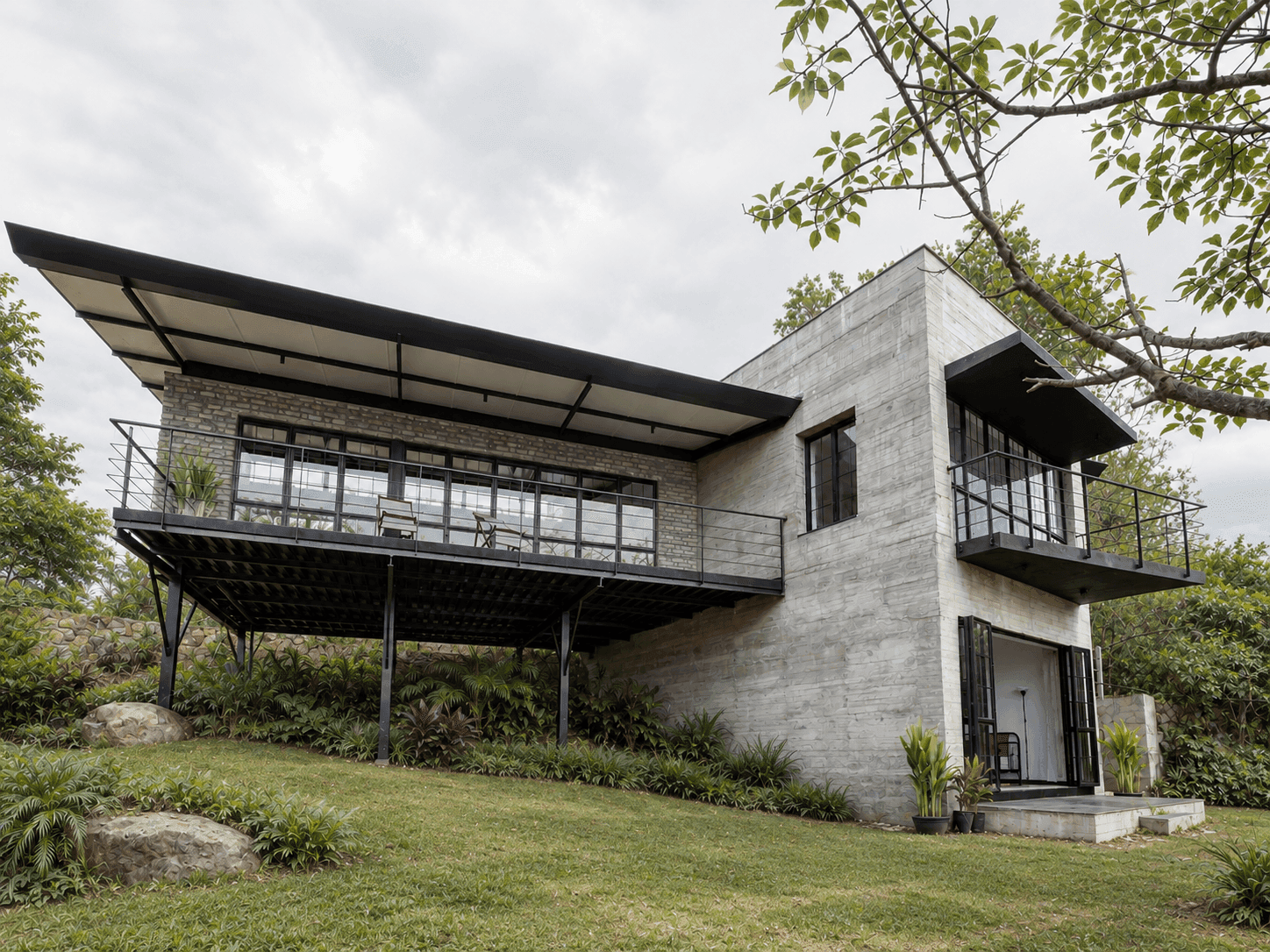
Turnkey suits a straightforward house, a client with little time and a builder you already trust. An architect-led route suits a site with a story: a slope, a view, a material you want to use, or a design that depends on craft. Urban Mud House replaced a standard concrete slab with a brick jack arch slab, a method that uses more labour and less material and works only when the designer and the builders work closely together. Cove House and Oblique House are weekend homes on contoured sites, where the design had to follow the land, and where site visits matter.
If you are unsure, talk to us before you commit to any builder. Our guides on how to choose an architect and how architects charge are a good place to start, or get in touch.
Common questions
- Is turnkey construction cheaper than hiring an architect and contractor separately?
- Sources disagree. Turnkey firms say it saves money, and separate hiring can look cheaper when the scope is incomplete. Compare the full scope and specification of each, not just the headline price.
- Do I still need an architect if I hire a turnkey builder?
- Some turnkey firms include design, and some owners hire an independent architect or a project management consultant to check quality. If your design is complex, an independent view is worth considering.
- What is a PMC?
- A project management consultant is an independent professional who oversees schedule, cost and quality on site on your behalf. Some owners use one with a turnkey builder.
- Can I use the architect's drawings to get quotes from several builders?
- Yes, if the drawings are detailed enough. That is one of the main advantages of keeping design and construction separate.
Projects mentioned

Sources for general guidance
Planning a project?
Red Brick Studio is an architecture, interior and landscape studio in Pune. Tell us about your site and what you have in mind.
Start a conversation